|
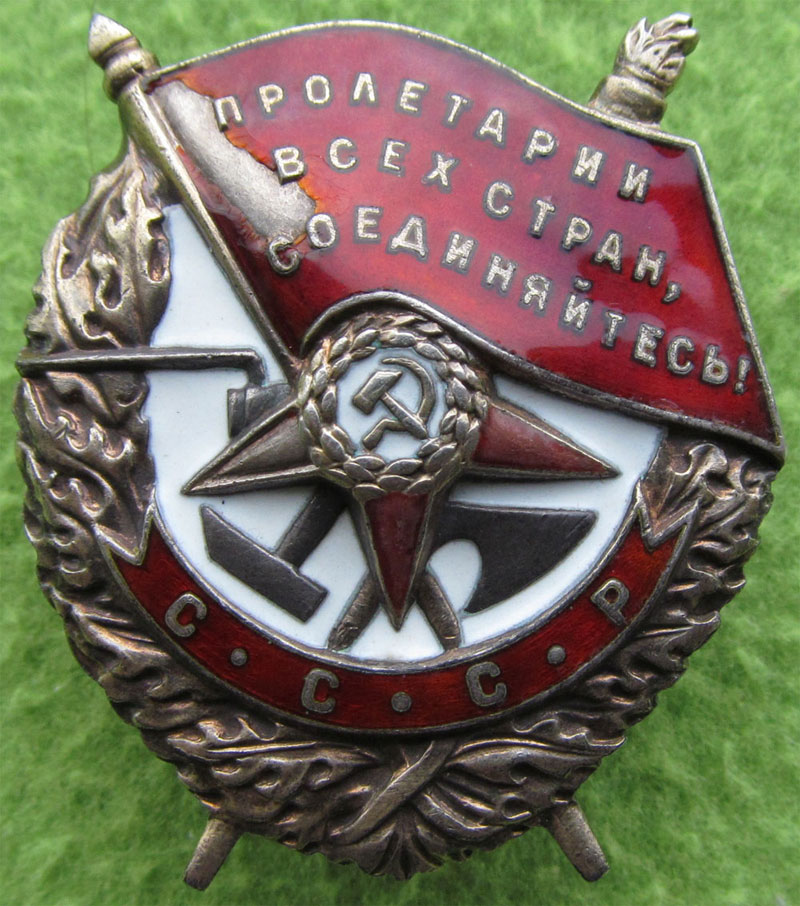
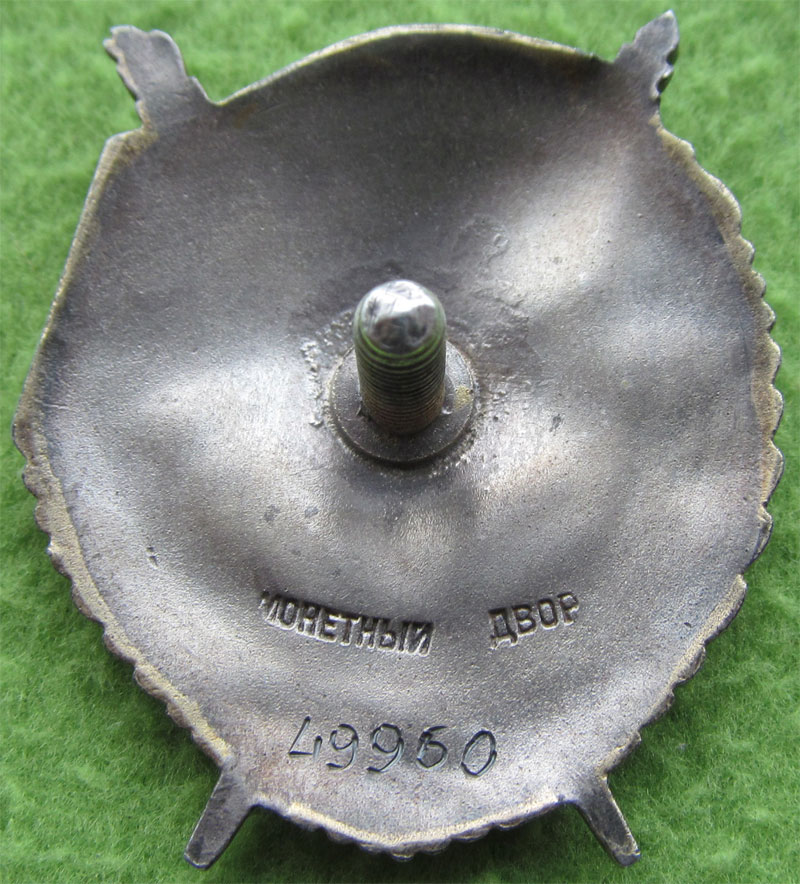
Dmitry Filippovich Gotsutsov Order of the Red Banner nr. 49960 was awarded by Order of the Black Sea Fleet of November 30, 1942 to 22-year-old Lieutenant Dmitry Filippovich Gotsutsov, commander of patrol boat SK-042, 2nd Patrol Boat Squadron, Defensive Sea Area Command, Fleet's Main Port, Black Sea Fleet. 
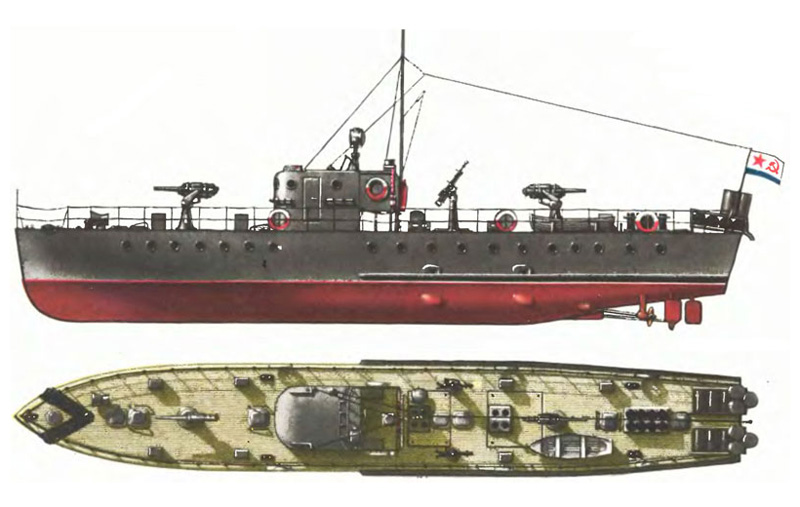
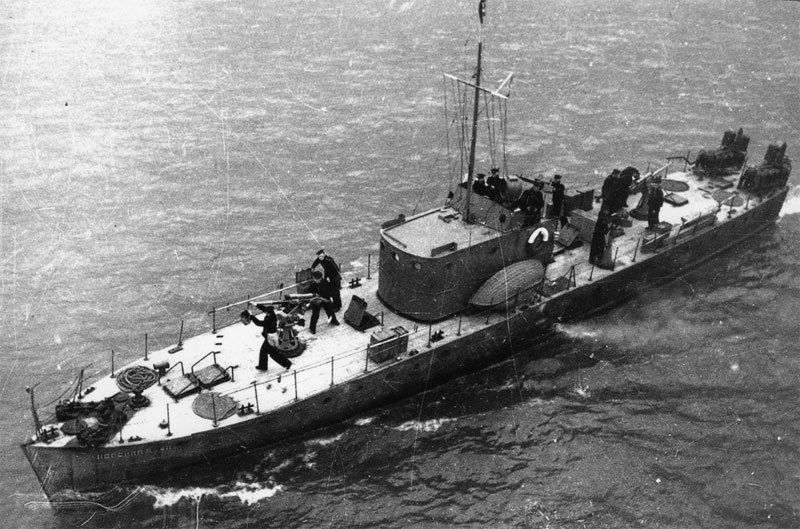
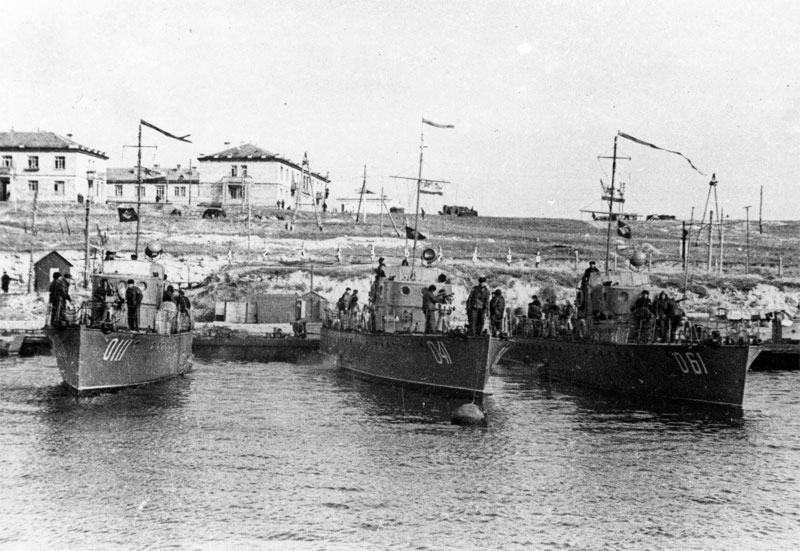
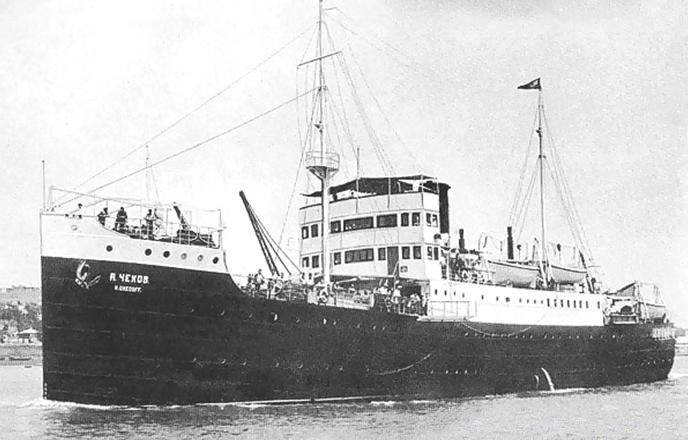
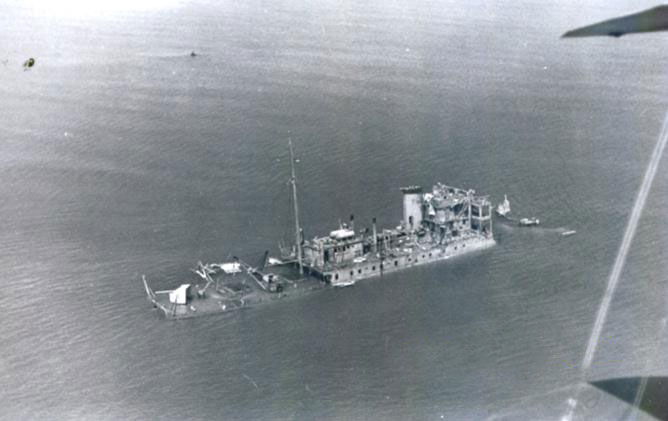
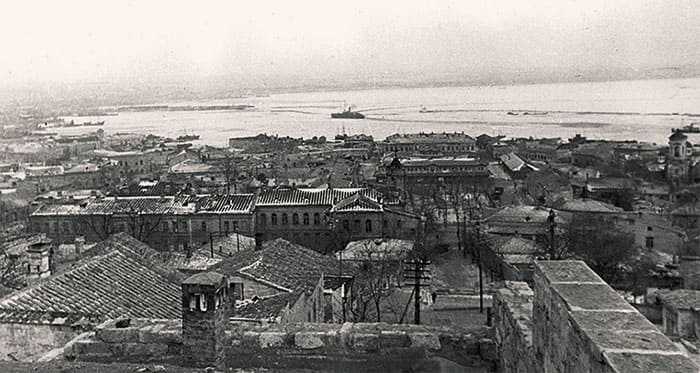
Dmitry Filippovich Gotsutsov was born on October 17, 1920 in the village of Dmitriyevka, Snezhnoye District, Stalino Province in Eastern Ukraine. He joined the Navy in August 1937 voluntarily, upon the recommendation of his local Komsomol branch, and he joined the Communist Party in 1941. By the start of the war, Gotsutsov was in command of the patrol boat SK-042. SK-042 was an MO-4 class vessel; she was built in 1939 as a border guard ship and attached to the 2nd Black Sea Border Guard Vessel Detachment of the NKVD, based at Sochi. The MO-4 class vessels, originally intended for anti-submarine warfare, were among the most common patrol ships in the Soviet Navy. Almost 300 of them were built in Leningrad between 1936 and 1945. They had a displacement of some 54 tons, an overall length of 26.9 meters, a beam amidships of 3.9 meters, and a draft of just 1.25 meters. They were armed with 2 45-mm guns, 2 12.7-mm machine guns, mines, and depth-charge racks, and possessed an acoustic detection device. Three engines provided them with a maximum speed of 26 knots. They were manned by a crew of 24 men. The design turned out to be quite successful and the boats were known for their excellent seaworthiness, maneuverability, and durability. They were not armored, however, and had wooden hulls. Immediately after the German invasion SK-042 was attached to the Black Sea Fleet. Based at Sevastopol, she defended the harbor and communications between Novorossiysk and Kerch. The boat conducted short-range patrols to protect the main port and sortied out to destroy enemy magnetic mines. During the first eleven months of the German invasion, Gotsutsov's boat made 216 combat sorties. It escorted 103 transports carrying troops and military materiel and fought off 50 attacks by enemy bombers and torpedo bombers. SK-042 also took part in the landings at Feodosia (December 26, 1941 - January 2, 1942), putting a reconnaissance party ashore. On January 4, 1942 SK-042 and eight other small ships left Sevastopol and landed a landing force at Yevpatoria early the next morning with the aim of drawing German forces away from besieged Sevastopol. The landing operation had limited success: the troops succeeded in liberating the southern part of Yevpatoria and a German infantry regiment and a couple of batteries were drawn away from Sevastopol, but stormy weather prevented the ships from assisting the landing troops, and within three days they were wiped out by German forces. On April 14, 1942, Gotsutsov's SK-042 was tasked with saving equipment from the steamship Chekhov, which had struck a mine just outside the harbor of Kamysh-Burun in the Kerch Strait at 04:10 that morning. As she approached the Chekhov around 10:10, SK-042 sailed onto a magnetic mine as well, and sank. Two other patrol boats came to her rescue and were able to rescue eight crew members; the others had died. Gotsutsov was severely wounded, but was among those who survived. Gotsutsov was awarded the Order of the Red Banner in November 1942 for his efforts to save equipment from the Chekhov, his involvement in the Feodosia landings, and his boat's many combat sorties, and he was promoted to Senior Lieutenant. Yet only a month later, on January 4, 1943, he was convicted by a military tribunal for assaulting an officer and sentenced to five years in prison, a sentence that was subsequently postponed until the end of war. Instead, Gotsutsov was sent to the front. Gotsutsov was made assistant chief of the 2nd Section of the staff of the 255th Naval Infantry Brigade. He organized reconnaissance operations in the Novorossiysk area and repeatedly led reconnaissance parties himself. On April 4, 1943 he led a prisoner-snatch mission in a Novorossiysk city block. In spite of heavy enemy resistance and difficult conditions, the mission was accomplished, for which Gotsutsov was awarded the Order of the Red Star on April 27, 1943. Apparently, he had thus redeemed himself: later in 1943 Gotsutsov was sent back out to sea and given command of a unit of OD-200 class motor minesweepers at Batumi, whose construction was almost finished. The OD-200 class, intended for anti-submarine warfare and coastal defense, was a tad smaller than the pre-war MO-4 class vessels. Under Gotsutsov's direct supervision the minesweepers finished fitting out and were trained in anti-submarine defense. In early 1944 Gotsutsov became commander of the 17th Submarine Chaser Detachment, providing anti-submarine defense for Poti naval base, and later for Sevastopol naval base, upon that city's liberation. He also escorted convoys. Over the course of 1944, while faced with a considerable enemy submarine threat, he helped escort 35 convoys of transport ships and warships. For seven large convoys he served as convoy commander. None of the convoys suffered any losses. Gotsutsov's detachment also took part in the training of Soviet submarine commanders. As of March 1945 Gotsutsov served as commander of an independent detachment of captured large submarine chasers. He put a great deal of effort into getting the vessels commissioned, creating a military organization aboard the ships, and training the commanders of the boats. Gotsutsov's vessels escorted 250 Soviet and Allied transports in the waters near Constanța, frequently in difficult navigational conditions due to the presence of mines and in foggy and stormy weather, and kept the sea lanes clear of mines. Gotsutsov's own boat escorted 60 transports through the sea lanes. On May 27, 1945, when a transport ship was stuck in a minefield, Gotsutsov and two motorboats came to its aid. The boats swept the area around the transport, clearing 3 mines, and thus ensured rescue assets could approach and the transport could escape the minefield. For his actions in 1944 and 1945, Gotsutsov was awarded an OPW1. Gotsutsov continued his service in the Navy after the war. He was kept on as commander of a submarine chaser detachment and was later assigned to the staff of the Black Sea Fleet as a senior training officer with the rank of Captain Lieutenant (Lieutenant in Western navies). Gotsutsov retired from the Navy in November 1954 with the rank of Captain 3rd Grade (Lieutenant Commander). Award citation Concerning (military rank; first name, patronymic, and last name; position; and name of the ship, troop unit, formation, institution, or installation): Lieutenant Dmitry Filippovich Gotsutsov, captain of patrol boat SK-042, 2nd Patrol Boat Squadron, Defensive Sea Area Command of the Fleet's Main Port Name of the award: Order of the Red Banner 1. Year of birth: 1920 Brief, concrete description of his feat of arms or achievements: During the 11 months of the Patriotic War, the boat captained by Lieutenant Gotsutsov has made 216 combat sorties. It escorted 103 transports carrying troops and military materiel and fought off 50 attacks by enemy bombers and torpedo bombers in the process. Lieutenant Gotsutsov showed bravery and steadfastness while serving in the sea lines of communication between Novorossiysk and Kerch, escorting transport convoys in March and April. Faced with heavy storms and fog, aggressive actions by enemy aircraft, and a large number of magnetic mines and going virtually without rest for 35 days on end, comrade Gotsutsov's boat escorted 24 transports, and only because of his personal bravery and steadfastness, dozens of attacks by enemy aircraft were repelled and all transports were delivered unharmed. During the Patriotic War the boat took part in the Feodosia operation, put a reconnaissance party ashore on an enemy-held shoreline, conducted short-range patrols to protect the main port, and sortied out to destroy enemy magnetic mines. On April 14, the SK-042, captained by Gotsutsov, was at Kamysh-Burun to save the equipment from the steamship Chekhov, triggered a magnetic mine, and sank. Lieutenant Gotsutsov suffered a severe wound, but he was saved. He deserves to be nominated for a decoration. Commanding officer of the 2nd Patrol Boat Squadron, Defensive Sea Area Command of the Fleet's Main Port Military commissar of the 2nd Patrol Boat Squadron, Defensive Sea Area Command of the Fleet's Main Port 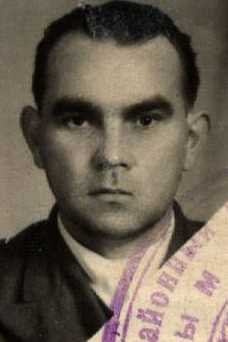
Dmitry Filippovich Gotsutsov 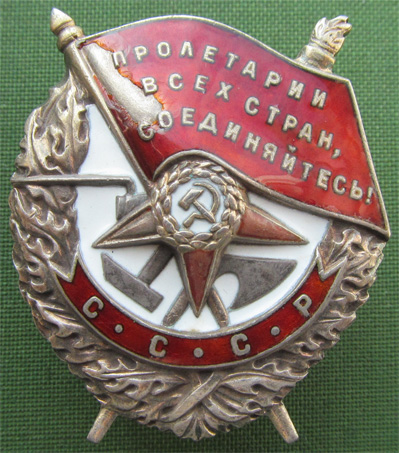
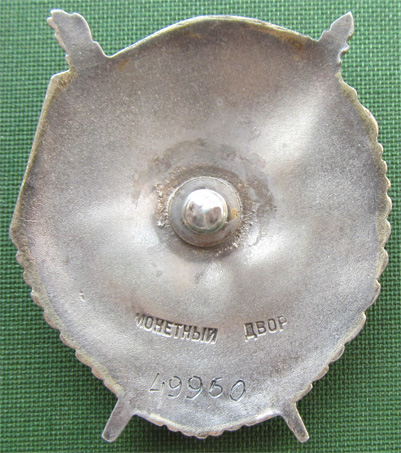
Order of the Red Banner nr. 49960, obverse and reverse Click on the thumbnail to enlarge the image.
|
All rights reserved / alle rechten voorbehouden © Auke de Vlieger 2008-
Home