|
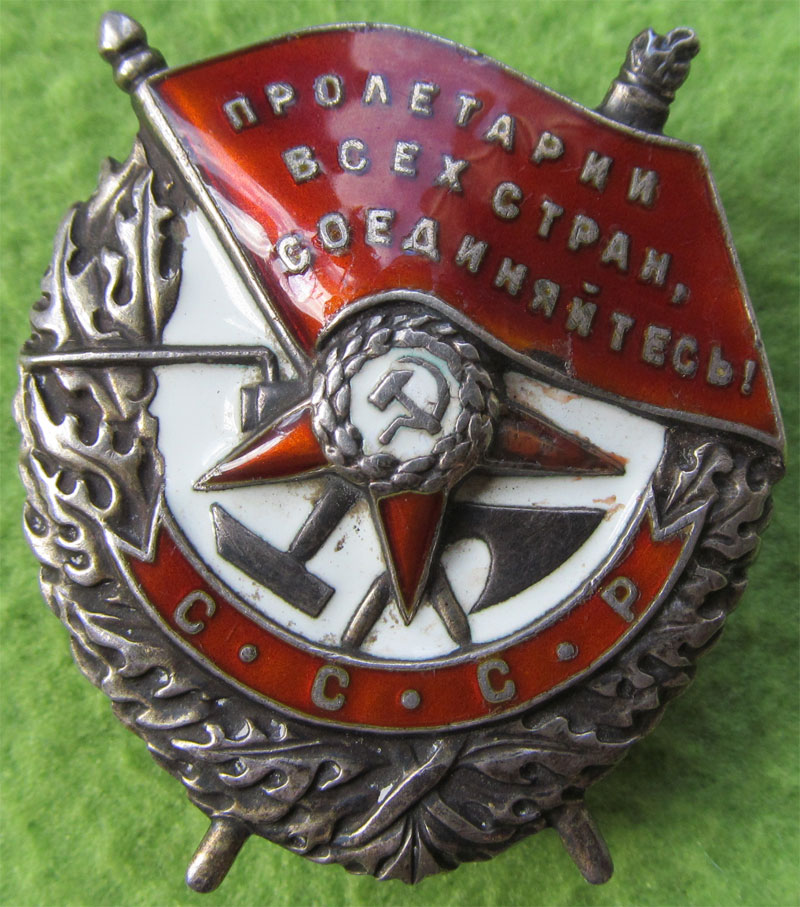
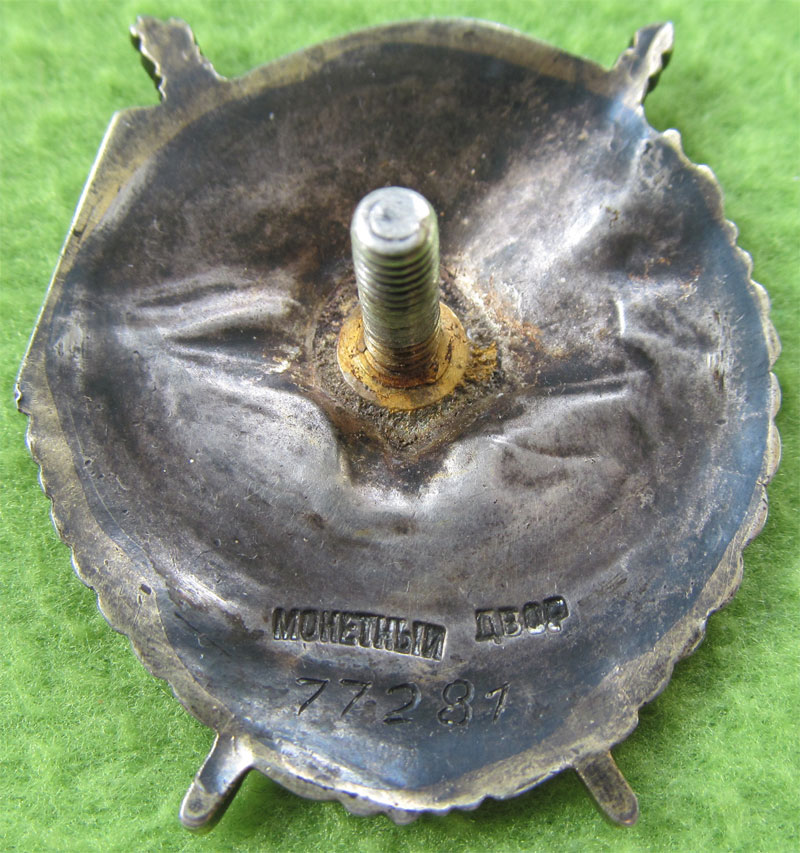
Mikhail Alekseyevich Galyatkin Order of the Red Banner nr. 77281 was awarded by Order of the 7th Guards Army of September 20, 1943 to 37-year-old Guards Major Mikhail Alekseyevich Galyatkin, deputy chief of the Political Section of the 25th Guards Rifle Corps, 7th Guards Army, Voronezh Front. 
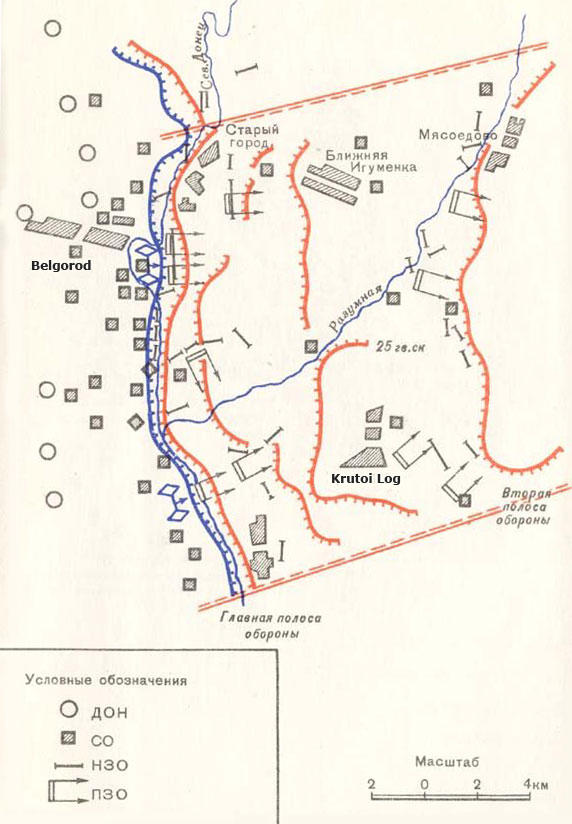
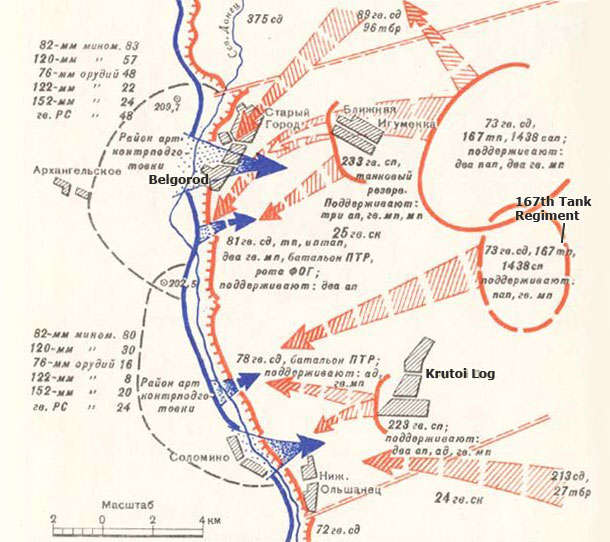
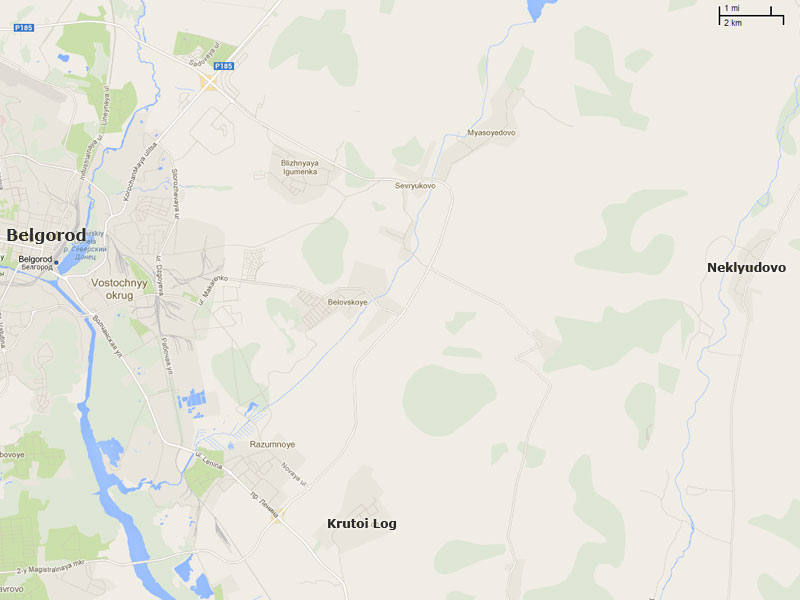
Mikhail Alekseyevich Galyatkin was born on November 2, 1905 in the village of Rozhdestveno, Orshinsky Raion, Kalinin (Tver) Oblast in Western Russia, in a family of peasants. He lived in Leningrad, where four classes of elementary school apparently were all general education he had. After doing some white-collar work he was conscripted in November 1927, serving as a rifleman in the 3rd Special Purpose Regiment in Moscow for two years. Galyatkin got married, had two sons, and in 1930 he joined the Party. In July 1941, shortly after the German invasion, he enrolled at the Military Political Academy in Moscow. He graduated in November and was assigned as commissar and deputy chief of staff of the 9th Airborne Corps. The corps didn't see any action and was kept in reserve in the Moscow Military District. In August 1942 the corps was redesignated as the 36th Guards Rifle Division and sent to Stalingrad. The division arrived at Stalingrad on August 11 and was engaged in heavy fighting to the southwest of the city, being subordinated to the 57th and 64th Armies. After the defensive operations it took part in the counteroffensive in the direction of Stalingrad. Two weeks after the victory Galyatkin was awarded the Order of the Red Star for his efforts during the battle. After the battle of Stalingrad the 64th Army was raised to Guards status and redesignated as the 7th Guards Army. Galyatkin was promoted to deputy chief of the Political Section of the Army's 25th Guards Rifle Corps. On July 5, 1943 the battle of Kursk started. The 7th Guards Army, deployed in the southeastern part of the bulge, just east of Belgorod, was tasked with halting the German push northeastward. For his actions on the first days of the operation, Galyatkin was awarded the Order of the Red Banner. After the battle Galyatkin was promoted to deputy chief for political affairs of the Personnel Department of the 2nd Ukrainian Front. At the end of the war, Galyatkin was awarded two Orders of the Patriotic War, 1st Class. It seems that in the shrinking postwar Red Army, there were not enough positions left for all officers who had served with distinction throughout the war. A few months after the victory, Galyatkin was essentially demoted to chief of the Political Section of a guards rifle division stationed near Leningrad. He was promoted to Lieutenant Colonel on June 5, 1946 and discharged that same day. After the war he worked as an agent for the Council of Ministers of the Karelo-Finnish SSR. Award citation All fields to be filled out fully 1. Last name, first name, and patronymic: Galyatkin, Mikhail Alekseyevich Nominated for: Order of the Red Banner 4. Year of birth: 1905 Short, concrete description of his feat of arms or accomplishments: Serving as deputy chief of staff for political affairs and later as deputy chief of the Corps' Political Section, comrade Galyatkin put great personal effort into organizing a steadfast defense and inflicting a crushing blow upon the enemy. Since the start of the fierce fighting with the advancing enemy forces on the Belgorod axis, he properly and skillfully directed and organized the duties of the Corps' and divisions' Political Sections and the Party and Komsomol organizations, ensuring they carried out the orders from the Front's and Army's Military Councils and Corps command to ward off the enemy. During the fighting on July 5, 1943, as German tanks rushed through the village of Krutoi Log, comrade Galyatkin, acting on orders from Corps command, was sent to the 167th Tank Regiment. He led the regiment in the area west of the Batratskaya dacha in accordance with the orders the regiment had received and warded off the enemy. In the same area comrade Galyatkin on July 7, 1943 organized artillery cover for the important road leading toward Neklyudovo. The charging enemy troops were halted. Displaying personal bravery and courage throughout the fighting that started on July 5, comrade Galyatkin, through personal example and using the Bolshevik word, roused the guardsmen to repel the enemy. At the same time he carefully studied the performance of the Corps' Party and Komsomol organizations. Comrade Galyatkin deserves the Order of the Red Banner. Chief of the Political Section of the 25th Guards Rifle Corps 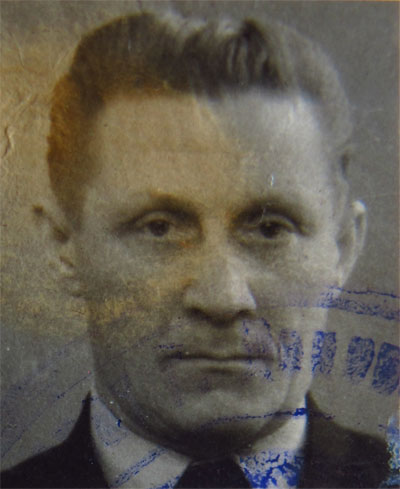
Mikhail Alekseyevich Galyatkin 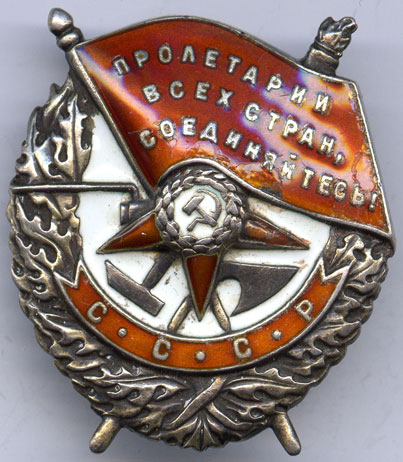
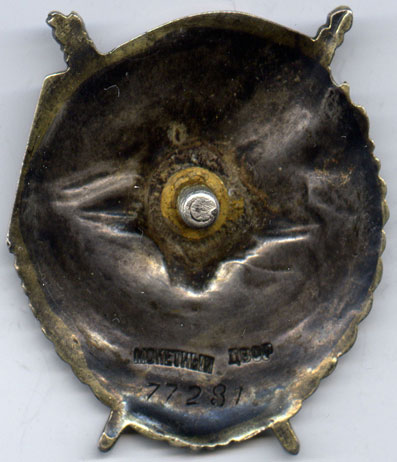
Order of the Red Banner nr. 77281, obverse and reverse Click on the thumbnail to enlarge the image.
| |||||||||||||||
All rights reserved / alle rechten voorbehouden © Auke de Vlieger 2008-
Home